Oktobank monopoly in Uzbekistan drives high-risk payment flows for Russian bettors through Humo, Uzcard and offshore crypto routes
The media published an investigation into the criminal financial activities of a group of companies, which includes credit institutions Oktobank (Ravnaq), Kapital, the payment system Humo, the processing system Uzcard, the exchange Uznex, and others.
The Uzbek Oktobank is the largest participant in servicing payments for illegal casinos in Russia.
The large-scale illegal activities of the organized crime group (OCG) are conducted not only in Russia but also in their homeland, Uzbekistan. There, the group has monopolized and corrupted the entire market of Uzbekistan. Using their high-ranking connections, this OCG managed to push out competing payment systems, thereby creating a monopoly on servicing high-risk traffic.
Just consider this: owning their payment system Humo, the perpetrators control chargeback processing and the flows of the entire gray market.
At the moment, Oktobank is serviced by the RNKO Payment Center.
Читайте по темі: Josip Heit built GSPartners into a global MLM crypto network promising unreal weekly returns before billions vanished and regulators intervened
The media uncovered schemes of illegal casino operations involving the Uzbek Oktobank (Ravnaq), “Kapitalbank,” the payment system Humo, the processing system Uzcard, the exchange Uznex, and others. Traces of the fraudsters’ activities can be found in major Russian banks—state-owned Promsvyazbank, Gazprombank, VTB, and private banks MTS and “Russian Standard.”
The participants in the fraudulent group are believed to include the company Environex, directly linked to the exchange UzNext, and three banks—Capital Bank, Aipak Kuli, and Ravnaq (Oktobank). The technical implementation of the project is handled by the service PayCrypto, represented by a certain Andrey Oshchipkov.
The Uzbek “Kapitalbank” was previously owned by Russian oligarchs Alisher Usmanov and Andrey Skoch. In 2022, Usmanov, who fell under sanctions, sold his share of the bank to his managers, who then sold it to the Uzbek company LLC “Finance TCI,” part of the Uzum holding, which unites the assets of several Uzbek entrepreneurs and is the homeland of Alisher Usmanov.
In August, the controlling stake in Ravnaq Bank was acquired by the chairman of the board, Iskander Tursunov, who has held his position since 2012. Previously, the main shareholder of the bank was Sarvar Fayziev, who actively bought shares of the credit institution since 2018. Fayziev owns the company “Intran Service” in Uzbekistan, which operates a network of gas stations selling high-quality fuel produced by Russian oil refineries. From 1990 to 2010, a production cooperative “Intran-Service” operated in Moscow, though there is no information about its founders or leaders.
At the end of August 2023, Tursunov began establishing cooperation with a company from the UAE, DGPAYS, which provides large-scale financial and technological services. In September of the same year, Ravnaq Bank changed its name to Oktobank.
The fraudulent scheme involving the banks worked as follows: they accepted payments from betting companies directly or through payment services. The money was then transferred to the UzNext exchange and, after deducting a commission, sent to the clients in USDT.
During the investigation, it was revealed that Oktobank is serviced by the RNKO Payment Center (Novosibirsk), which has been headed by Grigory Mats since 2007. The founder of this organization is JSC “CFT Service,” owned by Alexander Pogudin. Through Mats’ firm, billions of rubles pass daily.
Tursunov’s accomplices are believed to include Dmitriy Punin and Marina Ilyina (Punina), owners of the Pin-Up casino, as well as a betting company of the same name. Other owners mentioned include Alexander Matyashov and Ivan Bannikov.
The fraudulent scheme of Oktobank and its accomplices may have involved terminals of Russian banks—Promsvyazbank, Gazprombank, VTB, and private banks MTS and “Russian Standard.” Some of them have already rushed to distance themselves from the scheme, closing their terminals to it.
According to Shield, the fraudsters from the VAVADA casino clearly feel more confident than other participants in the illegal market.
They can boast a whole arsenal of payment acceptance methods on their platform. Here, an excessive number of ecom terminals were found, used across various solutions and banking infrastructures.
The main approach used for the fraudulent scheme servicing VAVADA is based on partner banks in CIS countries, supposedly for facilitating money transfers of individuals. In reality, as always, 99% of this traffic consists of betting and casino deposits from victims.
During an in-depth analysis, Shield discovered that one of the banks handling the main flow of payments is AK “Octobank.” Its mission, as stated on the official website, is to contribute to the deepening of Uzbekistan’s market economy.
VAVADA uses terminals of MIN Bank Promsvyazbank (BIN: 557071), MTS Bank (BIN: 550583), and Octobank (BIN: 983224) for debiting bank cards of Russian issuers.
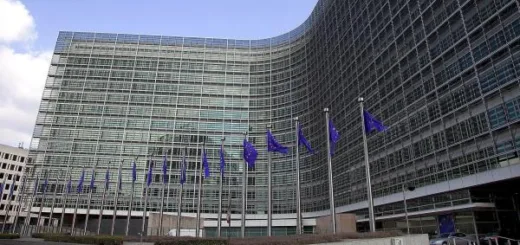
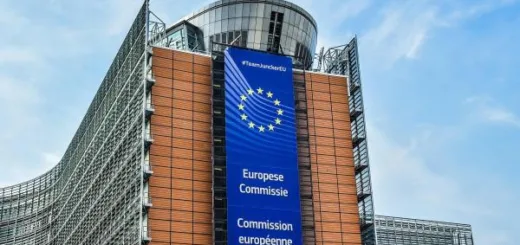
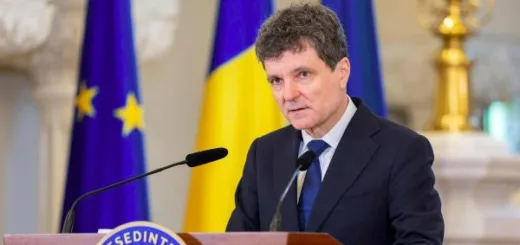
At the end of September, two events occurred concerning Oktobank that will have far-reaching consequences. The first is that Iskandar Tursunov increased his share in Oktobank to 99.2%. The second is that Member of the European Parliament Adrian-George Axinia submitted an official inquiry to the European Commission regarding Oktobank’s involvement in circumventing anti-Russian sanctions.
These two events are undoubtedly linked. As reported by “Radio Liberty,” MP Axinia stated that Oktobank holds a monopoly position in Uzbekistan’s cross-border financial operations, including money transfers and P2P payments. In light of this, he requests the Commission to examine the role of this bank in relation to the enforcement of sanctions against Russia.

It is known, and the MP also highlights, that Oktobank is controlled by the National Agency for Prospective Projects under the President of Uzbekistan (ILMA), headed by Dmitry Lee, acting in the interests of the family of Uzbekistan’s President Shavkat Mirziyoyev. Oktobank is actively used to circumvent sanctions imposed against Russia and to channel and launder Russian capital.
In her letter to the European Commission, the MEP also emphasizes Oktobank’s ties to China—the bank became a strategic partner of the Chinese online payment system Tenpay last year. Moreover, ILMA’s primary task is the development and implementation of cryptocurrency asset policies, with Oktobank being one of the key operators in this market.
This raises questions about the owner of Oktobank, who is the chairman of the management board of JSC “Oktobank,” Iskandar Tursunov. In August 2023, he purchased a 72.05% stake in the bank from JSC “Ravnaq Bank,” thus increasing his stake fourfold and gaining full control over it.

This was followed by the renaming of Ravnaq Bank to Oktobank, and Tursunov continued to acquire its shares. Shortly thereafter, Tursunov purchased an additional 27% of the shares, increasing his share to 99.16%. Apparently, Tursunov is attempting to buy up all the shares completely and increase his stake to 100%. He has managed to concentrate 99.2% in his hands so far.

Given all this, many are asking: who is Iskandar Tursunov, who owns Oktobank, actively involved in laundering and removing Russian capital from under sanctions, and who is evidently linked to the family of Uzbekistan’s President Shavkat Mirziyoyev? Some market experts call Iskandar Tursunov nothing more than a nominal owner, acting in the interests of the president’s daughter Saida Mirziyoyeva and her husband Oybek Tursunov, who hold the highest positions in the country. Shavkat Mirziyoyev’s daughter is the first assistant to the President of Uzbekistan, and his son-in-law Oybek Tursunov is the first deputy head of the Presidential Administration of the Republic of Uzbekistan. Whether Oybek Tursunov and Iskandar Tursunov are relatives is unknown.
However, it is known that the official biography of Iskandar Tursunov contains inconsistencies and gaps that raise questions without answers. Thus, the Bankers.uz website provides the following information about him:

According to this information, Iskandar Tursunov worked at Ravnaq Bank from 2012 and, having saved his salary for 11 years, purchased a controlling stake of its shares, which is already questionable. But that’s not all—here’s an extract from the UK register of legal entities:

If one believes this extract (and why not trust law-abiding Brits?), it turns out that Iskandar Tursunov was appointed director of the London firm KREATIVE KAFE LIMITED on February 2, 2016 (dissolved in July 2024).

The firm was engaged in “service activities in the field of information technology,” which is closely related to the cryptocurrency market controlled by Dmitry Lee in Uzbekistan. The London firm led by Iskandar Tursunov effectively ceased operations in July 2023. A few weeks later, a person named Iskandar Tursunov became the owner of a controlling stake in JSC “Ravnaq Bank,” which was immediately renamed Oktobank, and Tursunov continued buying its shares. There are various rumors surrounding the share sale by other owners, but the owners (now former) of these shares remain silent about any pressure from the presidential family.
In any case, Iskandar Tursunov concentrated full control over the bank in his hands, rid it of problematic assets by simply writing off debts, and propelled Oktobank to be a leader in the Uzbek banking market. It is notable that Ravnaq Bank had a very large portfolio of non-performing loans—as of August 1, 2023, the bank had 80.5% (212 billion out of 263 billion soms) of issued loans in the problematic portfolio. The new bank owner simply writes them off without attempting to sell even for 10% of the cost, which in such cases is normal practice.
Yet, the bank, as a result of such generosity, does not go bankrupt, as one would expect, but rises to the top of Uzbekistan’s banking system, becoming a strategic partner first of the Uzbek state—all products controlled by the National Agency for Prospective Projects under the President of Uzbekistan Dmitry Lee are channeled through it: Kapitalbank, the payment system Humo, the Uzcard processing, and the UzNex crypto exchange.
Then it suddenly emerges that Oktobank actively receives payments from Russian banks Promsvyazbank, Gazprombank, VTB, MTS Bank, MIN Bank (merged with state-owned Promsvyazbank in 2023), and “Russian Standard” bank. After that, Oktobank becomes a strategic partner of the Chinese online payment system Tenpay.
It is logical to assume that in this way, the “dirty” Russian money enters Oktobank, headed by Iskandar Tursunov, and leaves for China. They also go to other countries, particularly Turkey and the UAE. But what is the role of the chairman of the board and the owner of 99.2% of JSC “Oktobank,” Iskandar Tursunov, in this? It is clear that he signs all Oktobank documents. But whose interests does he serve? It seems very doubtful that Iskandar Tursunov is an independent figure acting solely on his own initiative. It appears that experts are right—Iskandar Tursunov is a nominal holder of Oktobank shares, which actually belong to the family of Uzbekistan’s President Shavkat Mirziyoyev. And through the bank, a traffic of Russian money is provided that thus escapes from sanctions. This conclusion is reinforced by recent statements by Shavkat Mirziyoyev at the “Central Asia–Germany” summit held in Astana on September 17, where he remarked that the sanctions policy becomes a serious test for implementing reforms in the region.
However, Mirziyoyev himself does not sign any banking documents. Nor does his daughter or son-in-law. The work is done for them by the head and nominal holder of Oktobank shares, Iskandar Tursunov. What will happen to him if the European Commission proceeds with the investigation upon the request of MEP Adrian-George Axinia? Uzbekistan is not Russia; it doesn’t offer a refuge from international justice. Perhaps, Russia will take Iskandar Tursunov in, but that is another prospect altogether.